


Show the Code : Ortho-GraphiX®
The Reading Hut® is innovating across communication, reading and spelling. Powered by Ortho-GraphiX®, our technologies and learning pathways help every child achieve Word Mapping Mastery®. We offer DfE-Aligned Bidirectional Word Mapping Training for Reception, KS1 and KS2 Teachers

What is Speech Sound Mapping?
⭐Interlinked Word Mapping Mastery® Learning Pathways: Easier, Speedier Reading and Spelling for All Neurotypes. Phonemies are used as IPA phonetic symbols for kids
Emma Hartnell-Baker MEd SEN
Neurodivergent Reading Whisperer®
"The Word Mapping Nerd"
Also view our whole class (self-paced) linguistic phonics: SpeechSoundPics.com
And One, Two, Three and Away! with the Code Overlay in the Early Years: SpeedieReadies.com
“Understanding that the letters on the page represent the sounds in spoken words underpins successful word reading. Pupils’ knowledge of the English alphabetic code, how letters or groups of letters represent the sounds of the language, supports their reading and spelling.” (Department for Education, 2023)
In reading, pupils are taught to decode by identifying graphemes in written words from left to right, saying the corresponding phonemes, and blending those phonemes to say the whole word (Department for Education, 2023, p. 47).
In spelling, pupils are taught to say a word clearly, segment it into phonemes, and select graphemes to represent each phoneme in writing (Department for Education, Writing Framework, 2025, p. 41).
Statutory spelling guidance further states that teachers should draw pupils’ attention to grapheme–phoneme correspondences that both do and do not fit with what has been taught so far (Department for Education, Spelling Framework, p. 75).
Speech Sound Mapping (SSM) as the named literacy intervention specified within a child's EHCP
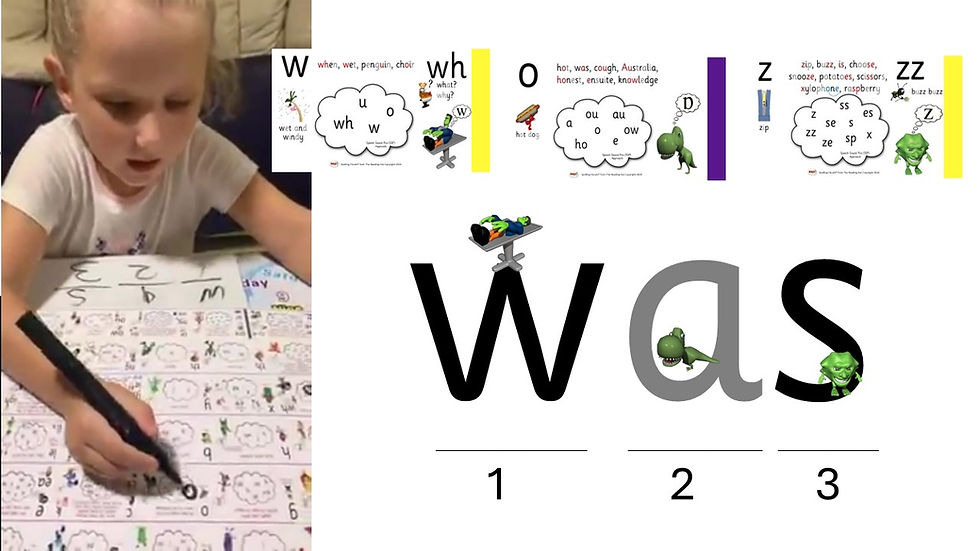
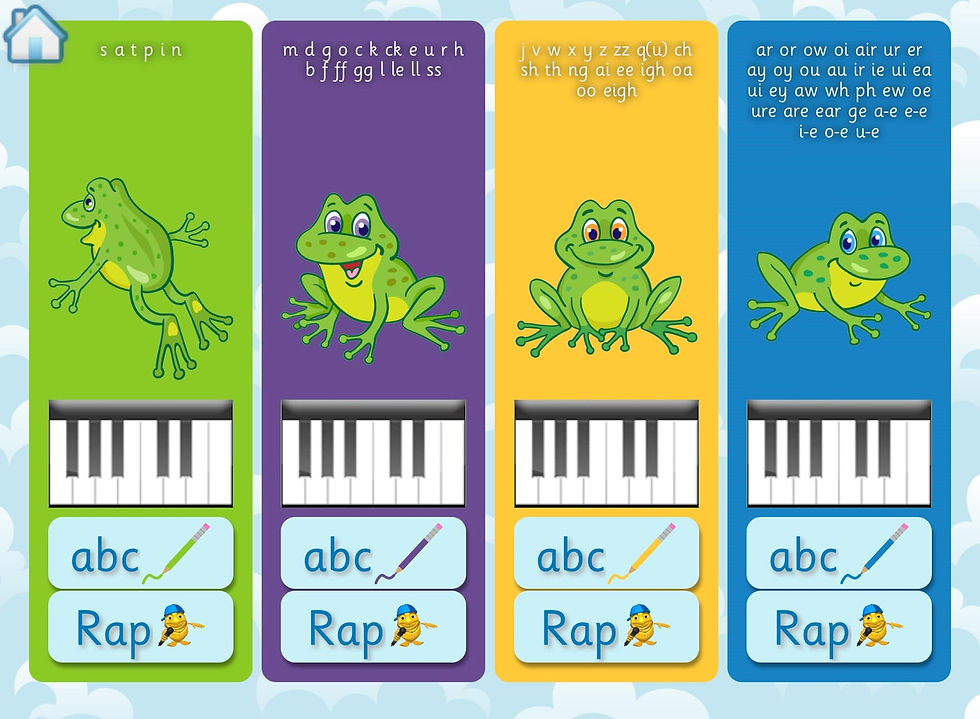
Speech Sound Mapping (SSM) is an intervention centred around Word Mapping Mastery®, using resources and technology that make the alphabetic code visible by showing how phonemes and graphemes connect within all words, including how pronunciation and mapping may vary depending on accent variation. The approach is designed to support children who are not reaching the self-teaching phase through synthetic phonics alone, despite exposure to the core grapheme-phoneme correspondences (GPCs) introduced and assessed through the Phonics Screening Check (PSC). The self-teaching phase is where children develop the orthographic knowledge needed to recognise words automatically and spell them accurately, as speech sounds, graphemes, and meaning become bonded within the orthographic lexicon. The goal of the intervention is to facilitate orthographic mapping and secure independent self-teaching. SSM centres around meaningful texts and real stories that interest the child, with all words made decodable through technology that shows the English Pronunciation Code and the use of Phonemies®, which function as child-friendly IPA-aligned phonetic symbols.










Speech Sound Mapping with The Code Overlay
Ask about including this in your child's EHCP if they are struggling to learn to read and spell, especially if they are ADHD, autistic, or at risk of dyslexia.
Speech Sound Mapping is an evidence based eapproach to mapping words in both directions, from speech to print and from print to speech. It supports learners to see which letters and letter groups function as graphemes and to understand their sound value using Phonemies.
Phonemies provide a visible and consistent representation of phonemes. They help children understand how speech sounds connect to written words. When working with adults, Phonemies also provide a shared language for discussing how accents influence pronunciation. Accent differences can change not only the sound value of graphemes but sometimes the grapheme choices used to represent those sounds. Making this visible helps both adults and children understand that speech and print mapping is flexible and influenced by spoken language variation.
Speech Sound Mapping provides a structured reset for children like Alf who have struggled to connect speech sounds and print through synthetic phonics programmes. Many of these learners have not yet developed the phonemic awareness needed to identify, segment and manipulate phonemes accurately. This approach returns to building that essential awareness so learners are able to connect phonemes and graphemes confidently.
The approach is increasingly being specified within Section F provision in Education, Health and Care Plans for children who have not made expected progress with their school’s synthetic phonics programme. It is frequently recommended for autistic learners and children with speech, language and communication needs, where making speech sounds visible can reduce processing demands and support access to literacy.
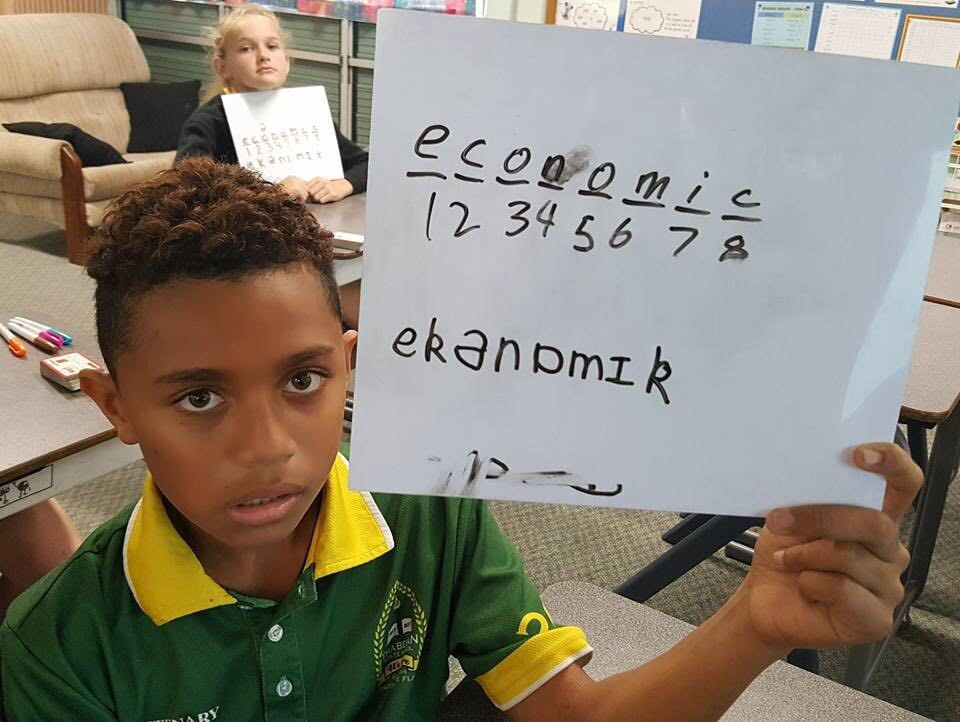
Once learners develop this awareness, they are guided to map words bidirectionally for both reading and spelling. They learn to analyse spoken words into phonemes and represent them with graphemes when spelling. They also learn to analyse written words into graphemes and link them to phonemes when reading.
Speech Sound Mapping also supports accurate formation of letters and numbers, ensuring that transcription skills develop alongside orthographic knowledge. Learners are taught to apply The Spelling Routine so that new words are analysed, stored and retained securely. Watch Luca, dyslexic, age 10.
Children under 9 are then guided to apply their mapping skills using orthographically mapped One, Two, Three and Away books. These books are designed to support daily word storage and independent self-teaching, helping learners build fluency, accuracy and confidence in both reading and spelling. We use them with children who are older than 9 but they may not be as appealing. We are creating a system that enables us to apply The Code Overlay to books that the child will be interested in reading, for example The Diary of the Wimpy Kid.
Imagine if a brilliant EP hadn’t recommended Speech Sound Mapping for Alfie.
Speech Sound Mapping, supported by The Code Overlay, provides a different way to guide the 1 in 5 who aren’t learning to read with synthetic phonics programmes towards self-teaching, by showing them the code for as long as they need it. It was designed with dyslexic pupils in mind, helping them see which letters are graphemes and the speech sounds they represent.
Well done to everyone involved, including Innovate UK for funding the first MVP. We’re now working towards offering The Code Overlay for any books children want to read, from Diary of a Wimpy Kid to Anne of Green Gables.
The goal is simple. Children reading for pleasure.
Alf is now excited about reading. Isn’t that the point of an EHCP?
“... teachers themselves also need to understand the alphabetic code: evidence supports the key role of phonic knowledge and skills in early reading and spelling.” (Department for Education, 2023)
Classroom teachers learn how to support the phonemic awareness needed for children to connect speech and print, so that the intervention is reinforced consistently throughout the school day.
They also attend training workshops to explore word mapping and develop confidence in supporting phoneme-to-grapheme mapping across the curriculum and during everyday classroom interactions. This level of support is expected within current DfE guidance, yet limited practical guidance is typically provided around how to do this effectively. The SSM approach provides that guidance through direct training, modelling, coaching, and ongoing implementation support.
